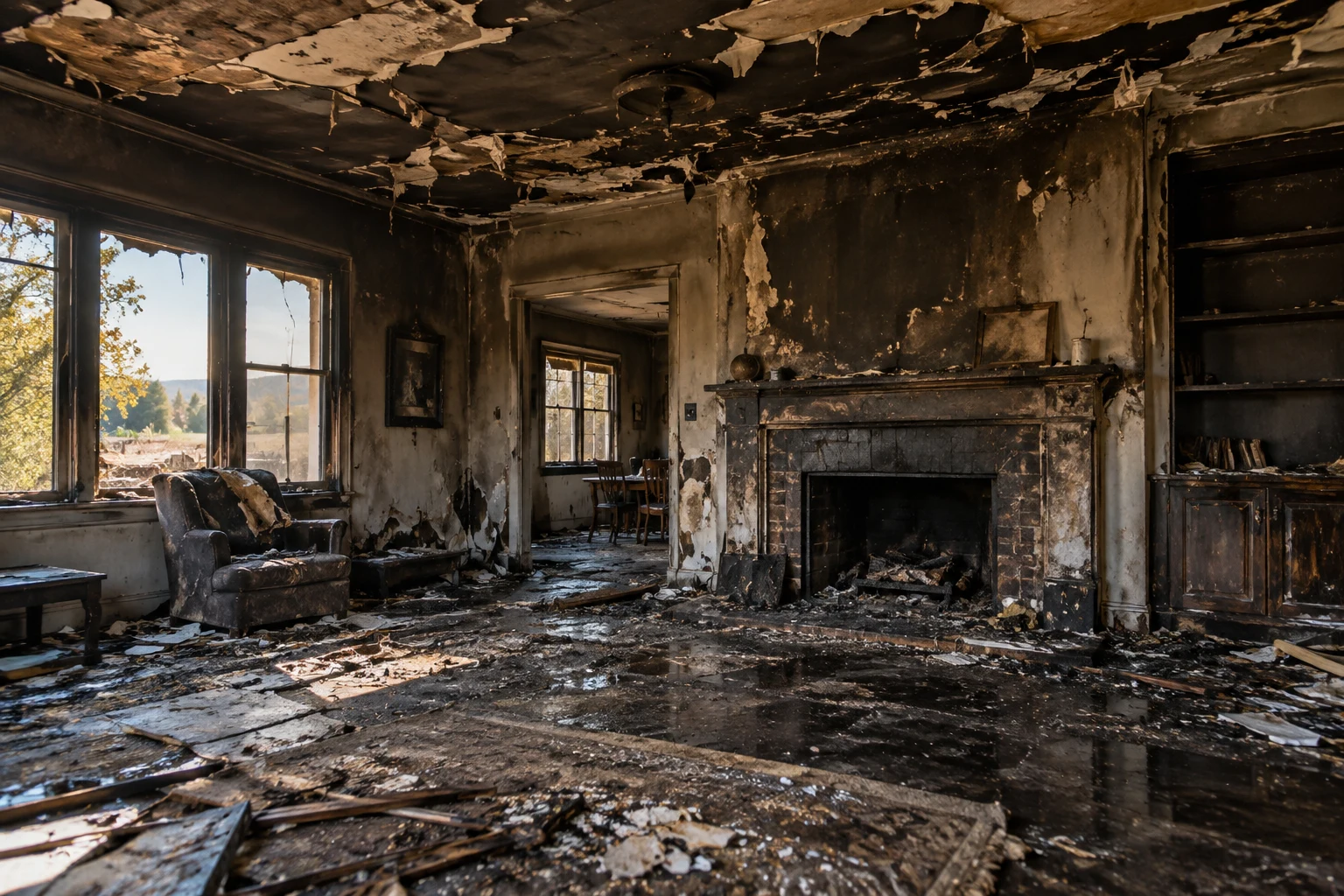
What happened?
Say whether the issue involves fire department water, windows opened by fire response, a kitchen fire, or another source of fire damage restoration in Polk County, FL.
Fire Damage Restoration in Polk County, FL for smoke odor, soot, charred debris, fire department water, damaged openings, wet materials, or rooms that need safe access before cleanup. Hugo helps homes, older buildings, waterfront properties, vacation rentals and hospitality spaces, and commercial spaces with smoke cleanup, soot handling, odor reduction, debris review, board-up, firefighting-water review, and documentation, safety-first guidance, and documentation support.
Call Hugo Fire & Water Restoration for 24/7 fire damage restoration in Polk County, FL. Hugo provides smoke cleanup, soot handling, odor reduction, debris review, board-up, firefighting-water review, and documentation for homes, older buildings, waterfront properties, vacation rentals and hospitality spaces, and commercial spaces near Lakeland, Winter Haven, and Davenport. Our team also organizes restoration documentation; insurance coverage and claim decisions remain with the carrier and policy.
Visible conditions determine the safest starting point for fire damage restoration in Polk County, FL. Hugo reviews smoke odor, soot, charred debris, fire department water, damaged openings, wet materials, or rooms that need safe access before cleanup, the property type, nearby access around Lakeland, Winter Haven, and Davenport, and whether the damage is still spreading.
Call Hugo with the source, timeline, affected rooms, access notes, and documentation needs. Our team can help with smoke cleanup, soot handling, odor reduction, debris review, board-up, firefighting-water review, and documentation for properties throughout Polk County, FL.
Say whether the issue involves fire department water, windows opened by fire response, a kitchen fire, or another source of fire damage restoration in Polk County, FL.
Mention smoke odor, soot, charred debris, fire department water, damaged openings, wet materials, or rooms that need safe access before cleanup, especially if water, smoke, odor, mold, openings, or unsafe access is still spreading.
Share whether you see damage to walls, ceilings, vents, closets, contents, flooring, cabinets, insulation, and materials affected by firefighting water.
Give access details and nearby context such as Lakeland, Winter Haven, and Davenport when it helps explain parking, gates, drainage, storm exposure, or business access.
Ask what photos, notes, dates, mitigation records, and insurance documentation should be kept together.
Ask whether the first step should be extraction, drying, containment, board-up, tarping, cleanup, or safety review.
Use these first steps for fire damage restoration in Polk County, FL when the problem involves smoke odor, soot, charred debris, fire department water, damaged openings, wet materials, or rooms that need safe access before cleanup. If anyone is unsafe, call 911 before calling for restoration help.
For homes, older buildings, waterfront properties, vacation rentals and hospitality spaces, and commercial spaces in Polk County, FL, Hugo explains which conditions are checked first, which materials may be affected, and which records are useful for the restoration and insurance file.
Hugo begins by reviewing smoke odor, soot, charred debris, fire department water, damaged openings, wet materials, or rooms that need safe access before cleanup in Polk County, FL, along with the reported source and immediate safety concerns.
Our team checks access, the property type, and affected areas near Lakeland, Winter Haven, and Davenport before mitigation or temporary protection begins.
The restoration plan addresses walls, ceilings, vents, closets, contents, flooring, cabinets, insulation, and materials affected by firefighting water, with work adjusted to the source and visible conditions.
Hugo documents photos of burned areas, smoke paths, soot residue, openings, firefighting water, contents, debris, and temporary protection as mitigation and restoration move forward.
The work plan accounts for heavy rain, drainage backup, lake or river influence, roof leaks, and moisture that can hide inside building materials, including the way moisture, smoke, debris, or exposure may affect the property.
Hugo organizes completed-work details and recommended next steps for the owner or manager in Polk County, FL.
If your Polk County, FL property has smoke odor, soot, charred debris, fire department water, damaged openings, wet materials, or rooms that need safe access before cleanup, call Hugo for 24/7 fire damage restoration. Polk County, FL properties can face heavy rain, drainage backup, lake or river influence, roof leaks, and moisture that can hide inside building materials. For fire damage restoration, fast attention matters because smoke, soot, odor, water, and exposed openings that can make the recovery harder to document if cleanup starts too soon.
Hugo provides smoke cleanup, soot handling, odor reduction, debris review, board-up, firefighting-water review, and documentation for homes, older buildings, waterfront properties, vacation rentals and hospitality spaces, and commercial spaces in Polk County, FL. Our goal is to stabilize active damage, protect exposed areas, and keep photos of burned areas, smoke paths, soot residue, openings, firefighting water, contents, debris, and temporary protection organized.
Local context matters. A call near Lakeland, Winter Haven, and Davenport may involve different access, drainage, roof exposure, rental turnover, commercial schedule, or documentation concerns than another Polk County, FL property.
When you call about fire damage restoration in Polk County, FL, describe smoke odor, soot, charred debris, fire department water, damaged openings, wet materials, or rooms that need safe access before cleanup, which rooms are affected, whether the condition is still active, and how the property can be accessed. Mention local context such as Lakeland, Winter Haven, and Davenport when it helps explain storm exposure, parking, gates, tenants, business hours, or drainage. That gives Hugo a clearer starting point for safe access, board-up when needed, debris review, smoke and soot cleanup, odor control, water mitigation, and insurance records.
When you call Hugo for fire damage restoration in Polk County, FL, share the source, timing, affected rooms, current safety issues, and whether the damage is still active. Nearby details such as Lakeland, Winter Haven, and Davenport can help explain access, drainage, roof exposure, business hours, tenant coordination, or property layout.
Hugo reviews visible conditions such as smoke odor, soot, charred debris, fire department water, damaged openings, wet materials, or rooms that need safe access before cleanup before explaining safe access, board-up when needed, debris review, smoke and soot cleanup, odor control, water mitigation, and insurance records. You only need to describe what you can safely see; our team will evaluate the restoration needs.
Polk County, FL conditions such as heavy rain, drainage backup, lake or river influence, roof leaks, and moisture that can hide inside building materials can change the order of work. Hugo prioritizes the active source, safety, temporary protection, affected materials, cleanup, drying, and documentation according to the property.
Documentation is most useful when it connects the visible damage to the timeline and the emergency actions taken. For fire damage restoration in Polk County, FL, capture photos of burned areas, smoke paths, soot residue, openings, firefighting water, contents, debris, and temporary protection from a safe position before cleanup or temporary protection changes the scene.
Hugo can help organize restoration documentation for owners, managers, adjusters, and carriers, but coverage and claim outcomes are determined by the insurance carrier. The goal is a clear record of a kitchen fire, affected materials, and mitigation steps.
Compare related restoration services for Polk County, FL, return to the Polk County, FL local hub, or review the main Fire Damage guide if you need broader information before calling.
Local conditions such as heavy rain, drainage backup, lake or river influence, roof leaks, and moisture that can hide inside building materials can affect fire damage restoration in Polk County, FL. Smoke, soot, odor, water, and exposed openings that can make the recovery harder to document if cleanup starts too soon can affect walls, ceilings, vents, closets, contents, flooring, cabinets, insulation, and materials affected by firefighting water.
Properties in and around Polk County, FL can face restoration demand from hurricane rainfall, heavy summer thunderstorms, roof leaks, slab leaks, and plumbing failures. The right emergency plan starts with safety, source control, moisture mapping, stabilization, and documentation.
Share the property's exact address and any known road closures, access restrictions, recent leaks, or storm damage in Polk County, FL. Conditions at the property determine whether extraction, drying, temporary protection, mold containment, smoke cleanup, or board-up is needed.
Smoke residue can affect mitigation, cleanup, drying, temporary protection, and insurance documentation for properties in Polk County, FL.
Soot on surfaces can affect mitigation, cleanup, drying, temporary protection, and insurance documentation for properties in Polk County, FL.
Odor movement can affect mitigation, cleanup, drying, temporary protection, and insurance documentation for properties in Polk County, FL.
Fire department water can affect mitigation, cleanup, drying, temporary protection, and insurance documentation for properties in Polk County, FL.
Broken openings can affect mitigation, cleanup, drying, temporary protection, and insurance documentation for properties in Polk County, FL.
Debris can affect mitigation, cleanup, drying, temporary protection, and insurance documentation for properties in Polk County, FL.
Contents damage can affect mitigation, cleanup, drying, temporary protection, and insurance documentation for properties in Polk County, FL.
Unsafe re-entry can affect mitigation, cleanup, drying, temporary protection, and insurance documentation for properties in Polk County, FL.
Hurricane rainfall in Polk County, FL can drive water through damaged roofs, windows, doors, and low drainage areas, making quick moisture checks and documentation important.
Heavy summer thunderstorms in Polk County, FL can produce wind-driven rain, roof leaks, lightning-related fire concerns, and fast water intrusion that needs prompt attention.
Roof leaks in Polk County, FL can wet ceilings, insulation, wall cavities, flooring, and contents before the damage is obvious from inside the property.
Slab leaks in Polk County, FL can move beneath flooring and into baseboards, cabinets, and adjoining rooms, so moisture mapping helps define the affected area.
Hugo Fire & Water Restoration supports fire damage restoration in Polk County, FL, including smoke, soot, odor, debris, board-up, water mitigation, and fire-damage documentation for homes, older buildings, waterfront properties, vacation rentals and hospitality spaces, and commercial spaces near Lakeland, Winter Haven, and Davenport.
Call as soon as the property is safe enough to discuss the damage. Early help can focus on safe access, board-up when needed, debris review, smoke and soot cleanup, odor control, water mitigation, and insurance records before conditions spread.
Photograph soot, debris, water, and damaged openings only from a safe, authorized location. Do not enter restricted areas to obtain photos. Describe odors in writing; a photograph cannot record an odor.
Fire Damage Restoration may also require water mitigation, structural drying, mold remediation, fire cleanup, emergency board-up, roof tarping, contents cleaning, or insurance documentation support depending on the conditions found.
If there is an active fire or immediate danger, move to safety and call 911 first. To arrange restoration, call Hugo 24/7 from a safe location and describe the known damage and access restrictions.
Yes, Fire Damage Restoration in Polk County, FL may include photos, scope notes, mitigation records, and insurance documentation support without guaranteeing claim outcomes.
Fire Damage Restoration in Polk County, FL can support homes, condos, apartments, HOAs, rentals, restaurants, retail spaces, offices, and commercial buildings.
Fire Damage Restoration in Polk County, FL may connect to water mitigation, drying, mold prevention, fire cleanup, storm protection, board-up, roof tarping, contents review, or documentation depending on conditions.
Fire Damage Restoration in Polk County, FL may connect with nearby services when smoke odor, soot, charred debris, fire department water, damaged openings, wet materials, or rooms that need safe access before cleanup affects more than one part of the property. Choose the service that matches the active damage, then call for 24/7 help if the property needs immediate stabilization.
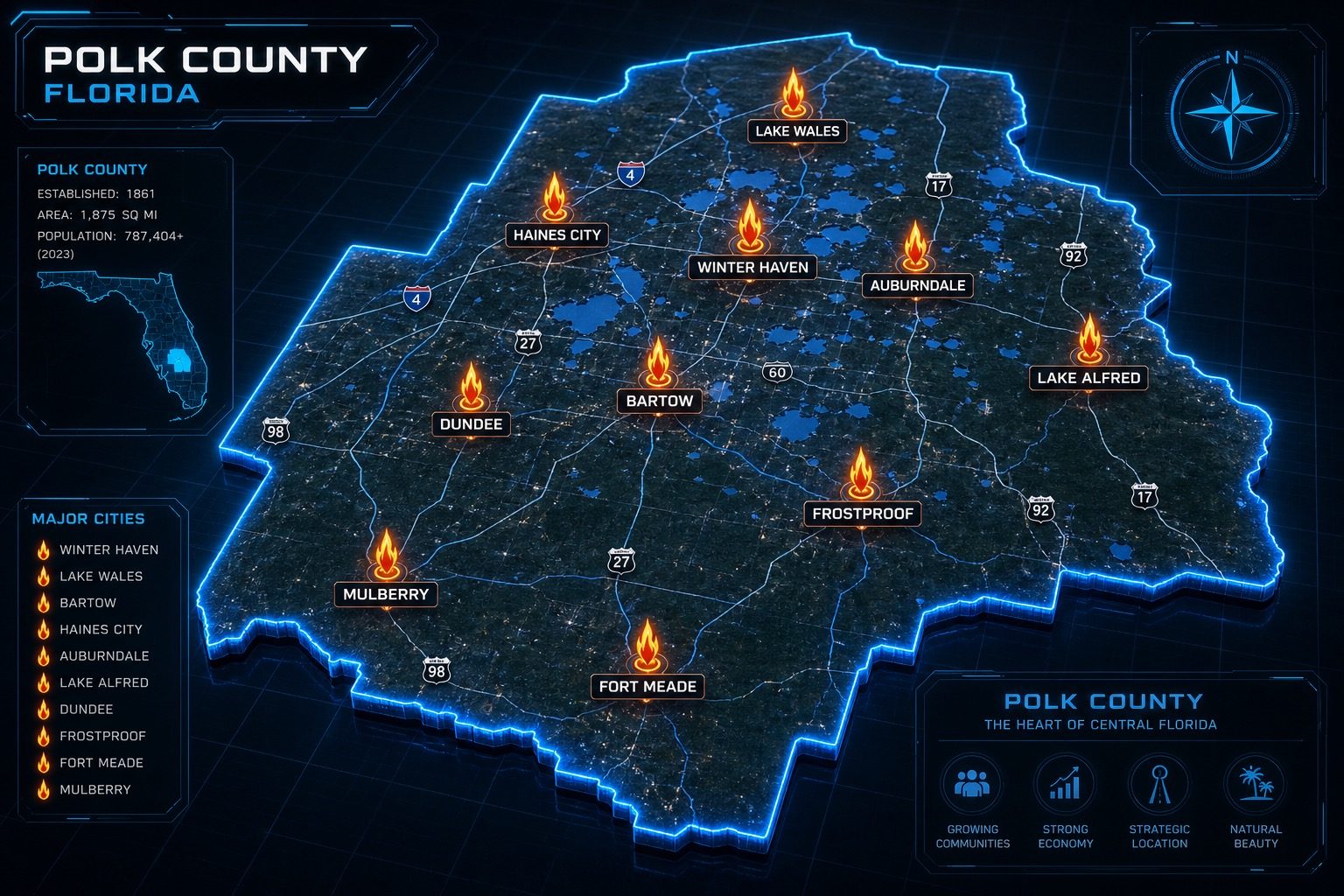
Find restoration services and nearby communities in Polk County, FL. Call Hugo with your address to discuss help for your property.
Use the public resources below for safety and preparedness information. Check which topics and locations each resource covers.
Follow current instructions from emergency services, utilities and local authorities. These resources do not confirm that a damaged property is safe to enter.
Fast mitigation for fire damage restoration in Polk County, FL helps control smoke, soot, odor, water, and exposed openings that can make the recovery harder to document if cleanup starts too soon. For homes, older buildings, waterfront properties, vacation rentals and hospitality spaces, and commercial spaces near Lakeland, Winter Haven, and Davenport, quick documentation and stabilization can keep the recovery easier to understand.
Call 24/7: (888) HUGONOWBoard-up can reduce rain exposure and unsafe access after fire damage affects windows, doors, walls, or roof sections. In Polk County, FL, that step often needs to account for Lakeland, Winter Haven, and Davenport.
Soot and smoke residue can smear, stain, and carry odor when surfaces are wiped before the cleanup plan is clear. In Polk County, FL, that step often needs to account for homes, older buildings, waterfront properties, vacation rentals and hospitality spaces, and commercial spaces.
Water used to extinguish a fire can soak flooring, walls, ceilings, cabinets, insulation, and contents. In Polk County, FL, that step often needs to account for heavy rain, drainage backup, lake or river influence, roof leaks, and moisture that can hide inside building materials.
Fast mitigation in Polk County, FL helps reduce soaked drywall, swollen flooring, cabinet damage, ceiling staining, and hidden moisture after heavy rain, drainage backup, lake or river influence, roof leaks, and moisture that can hide inside building materials.
Humidity can accelerate mold concerns in homes, older buildings, waterfront properties, vacation rentals and hospitality spaces, and commercial spaces, especially when leaks, flooding, or AC condensation are discovered late.
Smoke odor, soot residue, fire department water, and debris can spread through Polk County, FL properties unless cleanup, ventilation, and protection begin quickly.
Fire Damage Restoration needs can affect homes, older buildings, waterfront properties, vacation rentals and hospitality spaces, and commercial spaces in Polk County, FL. The property type changes access, contents, occupant communication, temporary protection, drying needs, and the documentation record.
These answers focus on fire damage restoration in Polk County, FL: smoke odor, soot, charred debris, fire department water, damaged openings, wet materials, or rooms that need safe access before cleanup, homes, older buildings, waterfront properties, vacation rentals and hospitality spaces, and commercial spaces, Lakeland, Winter Haven, and Davenport, and documentation questions that often come up in Polk County, FL.
Yes. Hugo supports fire damage restoration in Polk County, FL for homes, older buildings, waterfront properties, vacation rentals and hospitality spaces, and commercial spaces, with help for smoke, soot, odor, debris, board-up, water mitigation, and fire-damage documentation.
Wait for safe access before re-entering fire-damaged rooms. If it is safe, document smoke odor, soot, charred debris, fire department water, damaged openings, wet materials, or rooms that need safe access before cleanup and call before cleanup changes the starting condition.
Yes. Documentation may include photos of burned areas, smoke paths, soot residue, openings, firefighting water, contents, debris, and temporary protection. Insurance coverage and claim outcomes are determined by the carrier.
heavy rain, drainage backup, lake or river influence, roof leaks, and moisture that can hide inside building materials can affect how quickly smoke, soot, odor, water, and exposed openings that can make the recovery harder to document if cleanup starts too soon becomes a larger restoration problem, especially for homes, older buildings, waterfront properties, vacation rentals and hospitality spaces, and commercial spaces near Lakeland, Winter Haven, and Davenport.
The first step for Fire Damage Restoration in Polk County, FL is emergency help, safety review, source or exposure control, and documentation of visible damage.
Call the 24/7 emergency line or send a request so urgent fire, water, mold, and storm damage can be handled quickly.
When your property needs fire damage restoration in Polk County, keep people away from hazards. Note when fire damage restoration in Polk County began and whether conditions are changing.
Reviewed by Hugo Fire & Water Restoration on .
Before fire damage restoration in Polk County, leave unsafe areas. Describe only fire damage restoration in Polk County conditions that you can see safely.
For fire damage restoration in Polk County, wait for fire officials before entering. Report soot or odor safely for fire damage restoration in Polk County.
Keep safe photos, dates, and room names for fire damage restoration in Polk County. Save contacts and completed-work notes about fire damage restoration in Polk County.
For fire damage restoration in Polk County, share the address, source, affected rooms, and timeline. Also explain access and the authorized contact for fire damage restoration in Polk County.
Yes. Tell Hugo what you can safely see for fire damage restoration in Polk County. Explain when fire damage restoration in Polk County began and whether the source is still active.
Hugo can organize factual records for fire damage restoration in Polk County; your insurance policy and carrier determine coverage.
Call 24/7 when fire damage restoration in Polk County needs attention. Use the request form for safe fire damage restoration in Polk County details.